Basic concepts and procedures pertaining to electrical systems utilized in household and commercial environments are covered in domestic and electrical training. Anyone who wishes to comprehend and operate with electrical systems in a safe and efficient manner must complete this training course.
An overview of the topics that are covered in basic residential electrical training is shown below: It’s crucial to remember that although fundamental training offers a starting point, electrical work can become intricate, and specialized duties may call for more advanced instruction. When working on more complicated electrical jobs, always put safety first and think about consulting a professionals with more experience.
Audience
This course is ideal for :
- Electrical technicians and engineers who want to upgrade their practical knowledge.
- Maintenance personnel who are responsible for electrical systems.
- Facility managers and operators.
- Construction and building professionals.
- Beginners & Hobbyists: Individuals looking to start a new career, or work with electronic projects.
- Students & Graduates: Those from tertiary institutions seeking practical, job-ready skills.
- NYSC Corp Members & Job Seekers: Individuals interested in self-employment or obtaining technical roles.
Training Objectives
Electrical Theory:
It is essential to comprehend basic ideas such as Ohm’s Law, voltage, current, and resistance.
Safety Procedures:
When doing electrical work, it is crucial to understand and follow safety rules and procedures.
Wiring Techniques:
Becoming proficient in a variety of wiring techniques for use in commercial, industrial, and residential contexts.
Troubleshooting:
Gaining knowledge of how to identify and fix electrical problems.
Equipment Installation:
Gaining knowledge of how to connect and install different electrical devices, including control systems, transformers, and motors.
Maintenance and Repair:
Gaining the ability to fix and maintain electrical equipment and systems on a regular basis.
Relevant Regulations:
Recognizing and utilizing electrical codes and standards at the national and international levels.
Course Outline
Introduction to Electricity
Basic concepts of electricity: voltage, current, resistance, and power. Different types of circuits: series, parallel, and combination circuits.
Electrical Safety
Importance of electrical safety and precautions. Personal protective equipment (PPE) and safe work practices. Proper grounding and earthing techniques.
Electrical Components and Symbols
Identification and understanding of common electrical components: switches, outlets, circuit breakers, fuses, etc. Reading and interpreting electrical symbols and diagrams.
Electrical Wiring
Types of electrical wiring, conductors, insulators, and cables. Wiring techniques for residential and industrial installations. Wire sizing and gauge selection based on load requirements.
Circuit Breakers and Fuses
Purpose and operation of circuit breakers and fuses. How to select and replace circuit breakers and fuses.
Electrical Outlets and Switches
Installation and replacement of outlets and switches. Wiring configurations for outlets and switches.
Lighting Systems
Types of lighting fixtures and bulbs. Installation and maintenance of lighting systems.
Electrical Panels and Distribution
Overview of electrical panels and their components. Load distribution and balancing.
Three-Phase Power Systems (Industrial)
Introduction to three-phase power and its advantages. Wiring and connections in three-phase systems.
Motors and Motor Control (Industrial)
Basics of electric motors and their types. Motor control methods: direct-on-line, star-delta, variable frequency drives (VFDs), etc.
Troubleshooting and Maintenance:
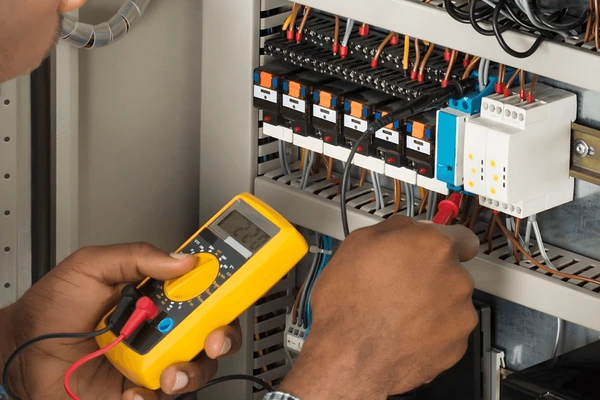
Identifying common electrical problems and faults. Testing and using electrical meters and testers.
Routine maintenance of electrical systems. Codes and Regulations
Familiarity with electrical codes and regulations in your region (e.g., National Electrical Code in the Nigeria ). Compliance with safety standards and legal requirements.
Hands-On Practice
Practical exercises and simulations for wiring, testing, and troubleshooting. Demonstrations of proper techniques for working with electrical components.
Benefits
- National Skills Qualification (NSQ) Curriculum (NBTE)
- Technical & Vocational Education Training Center
- Get Practical & Live Training
- Over 80 Percent Practical With State Of The Art Tools
- Internship For Exceptional Students
- Local & International Job Placement Assistance
- Business Support Assistance
- Technical Support After Your Training
- Certificate Of Attendance